
Blog
How to anchor a boat correctly?
We have decided to go out on a boat trip and we are going to stay stopped in the same place for a while. There is a bit of wind, so if we only stop the engine and do not drop the anchor (anchor), we will most likely end up somewhere farther away from where we decided to stay. To prevent this from happening, we are going to show you how to anchor a boat.
Anchoring is a manoeuvre that consists of securing the boat to the seabed using a chain or line and an anchor or mooring block.
Know the wind direction
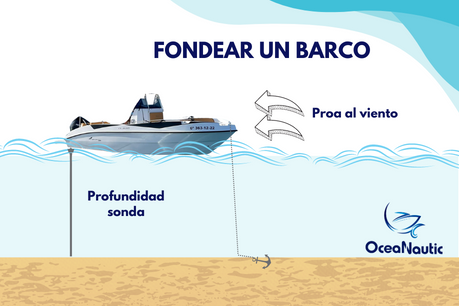
First of all, and most importantly, you need to know where the wind is coming from, because you must always anchor BOW into the wind.
Know the depth
You should know the depth (in the case of our boats, they are equipped with a depth sounder), as this allows you to determine the boat’s swinging circle (explained below).
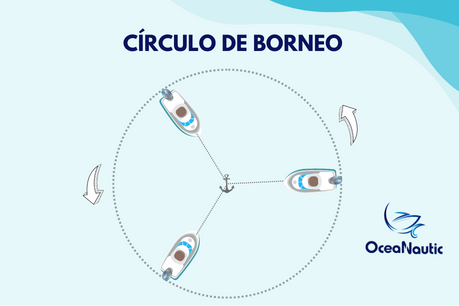
Swinging circle: the circular movement a boat makes around the anchoring position. The wind changes and causes boats to turn in a circle, as if they were a compass; it is important to take this into account not only for your own boat but also in relation to other boats, rocks, the shoreline, buoys, etc.
How much line to pay out when anchoring
Once you have taken these details into account, it is time to pay out line. How much line should I pay out to anchor a boat? This depends on the depth and the weather conditions.
In normal conditions, three times the depth: for example, if you have 4 metres of depth, paying out 12 metres of line is sufficient. In worse weather conditions and at greater depth, this ratio should be higher if you want a safer anchorage.
Types of Anchors and How to Choose the Right One for Anchoring a Boat
The success of anchoring a boat depends largely on choosing the right anchor. Not all anchors perform the same on every type of seabed, so it is essential to know the available options and which one best suits the specific conditions of your navigation. Here are the most common types of anchors and their applications:
1. Danforth anchor
The Danforth anchor is one of the most popular, especially valued for its excellent holding in sandy or muddy bottoms. Its design with long flukes and a flat structure makes it ideal for these types of seabed, as it penetrates easily and provides a firm hold. However, it is not recommended for rocky bottoms, where its effectiveness decreases considerably.
2. Bruce anchor
The Bruce anchor, also known as a claw anchor, is the preferred option for anchoring on mixed or rocky bottoms. Its curved design allows it to set quickly in varied terrain, providing reliable holding. This versatility makes it an excellent choice when navigating areas with different types of seabed.
3. CQR anchor
The CQR anchor, popularly known as a plough anchor, is another very versatile option. It is effective on a variety of bottoms, including sand, mud, and gravel. Its plough design allows it to cut and penetrate the seabed, making it especially reliable in varied conditions. It is a solid choice for those looking for consistent performance in different situations.
4. Rocna anchor
The Rocna anchor stands out for its holding power on most seabeds, although it is especially effective in mud and sand. Its modern design allows it to set quickly and provide a secure hold, making it ideal for situations where it is crucial to secure the boat rapidly.
Common Mistakes When Anchoring a Boat and How to Avoid Them
Anchoring a boat correctly may seem simple, but there are common mistakes that even experienced sailors can make. Here are some of these mistakes and how to avoid them to ensure a safe anchorage:
1. Not Paying Out Enough Line
A common mistake is not paying out enough line. The amount of line you should pay out should be at least two to three times the water depth, although in adverse conditions it is advisable to increase this ratio. Paying out enough line allows the anchor to have the proper angle of pull and improves its holding.
2. Not Calculating the Swinging Circle
The swinging circle is the circular movement the boat makes around the anchor due to changes in wind or current direction. Not calculating this space correctly can result in collisions with other boats, rocks, or nearby obstacles. Make sure you have enough clear space around your boat to avoid accidents.
3. Not Checking the Anchor Has Set
Once you have dropped the anchor, it is crucial to make sure it has set properly on the bottom. To do this, engage reverse gently and observe whether the anchor holds firm. This step is vital to confirm that the boat will not drift unexpectedly.
4. Not Taking Weather Conditions into Account
Ignoring weather conditions can put your anchorage at risk. Wind, currents, and tides can significantly influence the anchor’s stability. Before anchoring, check the weather forecast and adjust your anchoring technique according to the conditions to ensure the boat’s safety.
How Weather Conditions Affect Anchoring a Boat
Weather is a determining factor in the effectiveness of anchoring a boat. Conditions can change quickly, and it is essential to be prepared to adapt your anchoring technique to the situation. Below, we explain how different conditions can affect anchoring and what to do to counteract them:
1. Strong wind
In strong wind conditions, the boat puts greater strain on the anchor, which can cause it to drag if it is not well set. To avoid this, it is advisable to pay out more line or chain, which increases the angle of pull and provides greater stability. In extreme situations, consider using a second anchor to reinforce safety.
2. Strong currents
Strong currents can pull the boat sideways, reducing the anchor’s effectiveness. To anchor in areas with strong currents, look for a spot where the current is weaker or use an anchor designed for these conditions, such as a CQR or a Rocna, which offer better holding on difficult bottoms.
3. Changing tides
Tides not only change the water depth, but they can also change the direction and strength of currents. In areas with significant tides, it is essential to calculate both high and low tide to ensure the boat does not run aground and that the line will not be insufficient.
4. Swell
Swell can cause the boat to roll considerably, which could compromise the anchorage if not enough line has been paid out. In waters with heavy swell, look for sheltered areas or bays where the effect of the swell is reduced to anchor more safely.
Staying informed about weather conditions before and during your navigation is essential to ensure a safe and effective anchorage. Do not hesitate to adjust your technique and equipment according to the circumstances to ensure your boat remains in the desired position.
If you would like to keep learning more about boating, such as anchoring a boat, we look forward to seeing you on our PER/PNB course (Pleasure Craft Skipper/Basic Navigation Skipper) at our OceaNautic Nautical School in Benalmádena (Málaga).
More info at: PER – Pleasure Craft Skipper